
Of course, people know cotton as a textile. Cotton tees, denim, dress shirts – they’re all iconic cotton categories. But cotton is gaining ground in new spaces, from performance textiles and packaging to bio-based products, showcasing versatility beyond traditional apparel.
“Cotton is often thought of as a textile fiber, but it’s really a material with applications that extend far beyond apparel: such as absorbent hygiene products, engineered composites and thermoplastics, and foams. Cotton can replace synthetic materials in many applications,” explained Cotton Incorporated’s Dr. Neil Demarse, director of new market development, in an interview with the Lifestyle Monitor™. “What makes cotton unique is that the entire plant provides value. The fiber enables performance materials and nonwovens, while cottonseed supports food, feed and oils used in cosmetics and personal care. It provides value across multiple industries.”
As industries look for alternatives to petroleum-based materials, cotton presents an opportunity to introduce renewable content without sacrificing performance.
Dr. Neil Demarse, Director of New Market Development, Cotton Incorporated
Raan’s Vanessa Menache, co-founder and CEO of the wet wipes brand, details how her company’s 100 percent cotton products perform in the hygiene market.
“We really wanted to make a wipe that’s truly natural,” Menache told the Lifestyle Monitor™ in an interview. “The existing options on the market are plant-based – tree pulp or bamboo. But those require heavy chemical processing and bleaching to become a wipe, and most contain microplastics used as fiber binders. We chose unbleached cotton because it’s a natural fiber that outperforms others in softness, durability and absorption. It’s a gentler process that’s better for sensitive skin and better for the environment.”
That holds relevance with the 78 percent of U.S. consumers who say cotton is safe for the environment, according to Cotton Council International (CCI) and Cotton Incorporated’s 2026 Global Sustainability Study (n=1,022). Further, consumers say cotton fiber is the most natural (76 percent), sustainable (64 percent) and highest quality (71 percent), according to Cotton Incorporated’s 2026 Lifestyle Monitor™ Survey of 498 U.S. respondents.
“We’re seeing a shift across categories toward cotton and natural fibers, but most people aren’t aware of how conventional wipes are actually made,” Menache said. “We’re trying to move the wipe category into something better. The feedback has been incredible – people can genuinely feel the difference. Customers with sensitive skin are finding real relief, and those who are conscious about synthetic fibers are so excited to finally have a nothing-but-cotton option.”
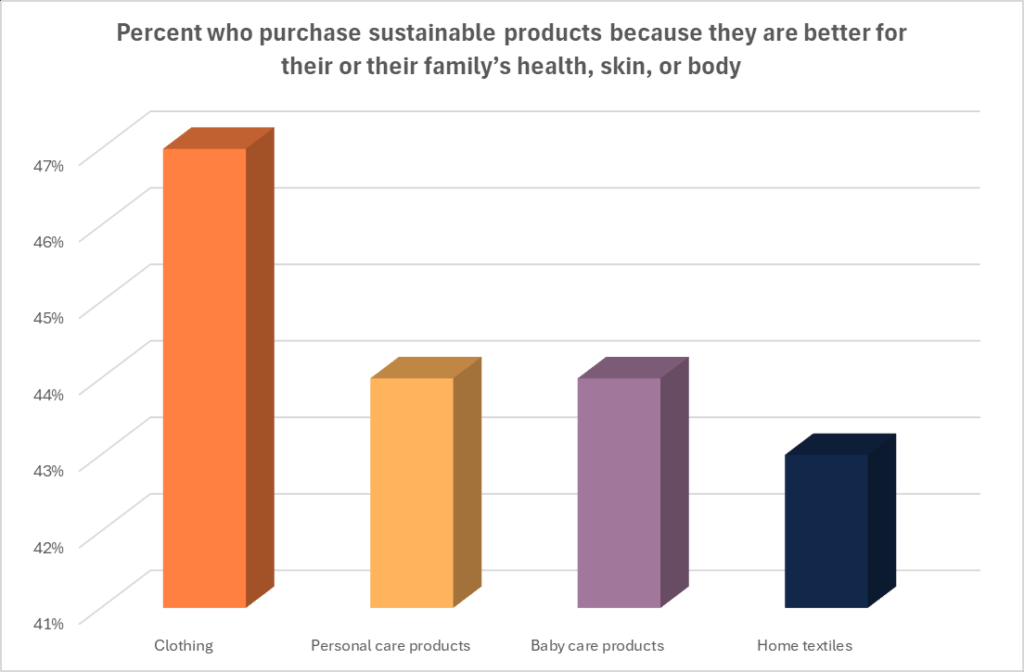
Products like Raan wipes might hold appeal to the 58 percent of U.S. consumers who recognize that cotton does not contain microplastics, according to CCI and Cotton Incorporated’s 2026 Global Sustainability Study of 1,022 respondents. And 65 percent of American shoppers say that sustainability influences their purchase of personal care items at least a moderate amount, with 44 percent of them saying they look for sustainable products because they are better for their health, body and skin, per CCI and Cotton Incorporated’s 2026 Global Sustainability Study (n=665-1,022).
Numerous industries are employing cottonseed oil precisely for its sustainable health factors. Dr. Amy Bandy, owner and board-certified plastic and reconstructive surgeon of Dr. Bandy advocates for cottonseed oil products like LeaBotanical Cotton Seed Oil, particularly since she is a specialist in dermatology.
“Cottonseed oil is known for its vitamin E and essential fatty acid content, which helps moisturize the skin while maintaining the skin’s protective barrier,” Dr. Bandy told the Lifestyle Monitor™ in an interview. “It is known as an emollient that helps moisturize the skin…, which makes it suitable even for sensitive skin types.”
Cottonseed oil is also appreciated by the food industry. Stratas Foods’ Josh Tuinstra, director of R&D for the North American supplier of fats, oils and more for the foodservice and food manufacturing industries, said cottonseed oil offers strong growth potential in restaurants. He told the Lifestyle Monitor™ that due to its oxidative stability, neutral flavor and consistent performance, cottonseed oil is ideal for high-volume frying applications like chicken, fries and battered items. But that’s not all.
“Beyond the fryer, it delivers value across back-of-house uses including sautéing, griddle cooking, sauces, dressings, marinades and baking, where its clean flavor and functionality support both savory and sweet applications,” Tuinstra told the Lifestyle Monitor™ in an interview. “As operators seek versatile, domestic vegetable oils, cottonseed oil can expand its role across both core cooking platforms and value-added menu components.”
The New Orleans landmark and tourist destination Café du Monde is famous for serving its café au lait coffee with piping hot beignets, which have been fried in cottonseed oil for nearly 150 years. Burt Benrud, vice president, says his family has used it to fry beignets in their high-volume operation for generations, largely because of how reliably it performs at scale and how it maintains the signature flavor customers expect.
“If you want to keep a product consistent year after year, you don’t change the fundamentals,” Benrud told the Lifestyle Monitor™. “Cottonseed oil has always been part of our process – it gives us the flavor and performance we rely on every day.”
Whether for consumption, skincare or industrial composites and foams, the humble cotton plant brings more to the table than textiles alone.
“As industries look for alternatives to petroleum-based materials, cotton presents an opportunity to introduce renewable content without sacrificing performance,” Demarse said. “In many emerging applications, from advanced materials to personal care, cotton can integrate into existing manufacturing systems while improving the sustainability profile of the final product. There’s growing interest in natural materials that deliver both performance and transparency in sourcing. Cotton meets those expectations while offering the scale, supply chain and technical properties manufacturers need to bring new products to market.”