New research from Cotton Incorporated shows shoppers are increasingly
aware of microplastics and prioritizing natural fibers
CARY, N.C. (Apr. 23, 2026) – As consumer awareness of microplastics climbs, new Cotton Incorporated research finds shoppers increasingly linking the issue to clothing. This insight could signal a shift elevating fiber choice as a critical sustainability decision for textile and apparel brands.
“The shopping sentiment points to a shift toward more material-specific sustainability expectations,” said Melissa Bastos, director of corporate strategy and insights at Cotton Incorporated. “Consumers overwhelmingly view cotton as environmentally safe compared with synthetic fibers, signaling that fiber perception is playing a larger role in how apparel sustainability is evaluated.”
- Sustainability intent rises even as concern softens: overall concern about environmental change is 73%1 of U.S. consumers, but motivation to act sustainably rose to 76% in 2026 (from 73% in 2023).
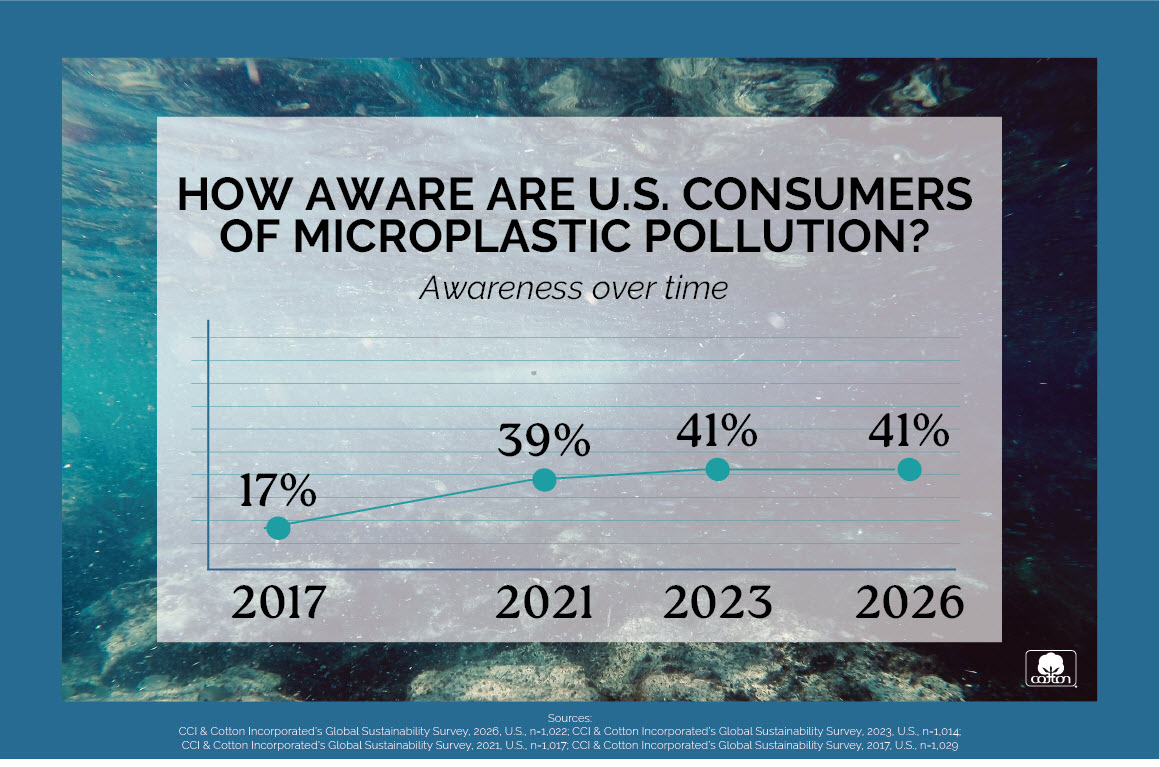
- Microplastics are moving into the mainstream: 41% of U.S. consumers say they’re aware of microplastics pollution—up from 17% in 20172—signaling a steadily growing issue shoppers recognize and discuss.
- Consumer risk is becoming a sourcing requirement: Among consumers concerned about microplastics, 41% of consumers say they consider wearing clothing containing microplastics3 to be a major concern, raising the stakes for fiber content disclosure, preferred fiber programs, and claims substantiation across the supply chain.
- Demand signal for microplastic-free fibers could reshape assortments: 59% of consumers say they’re likely to look for clothing made with microplastic-free fibers4, suggesting near-term opportunities for mills and manufacturers that can scale natural- or low-shed constructions and help brands translate fiber choices into clear on-hangtag and e-commerce messaging.
- Behavior change is starting—but it’s fragmented: Consumers report actions including limiting plastic purchases/use (37%), recycling (27%), replacing containers (19%), and seeking natural materials (12%)5—early signals that material and packaging choices can influence purchasing.
The research suggests a strategic opportunity for brands, mills, and manufacturers lies in aligning natural materials like cotton, innovation, and messaging with what shoppers increasingly understand about plastics, microfibers, and sustainability. As a plant-based fiber, cotton does not shed microplastics and can biodegrade. This could position sourcing leaders to meet consumers’ rising expectations.
About Cotton Incorporated
Cotton Incorporated is the research and promotion company for Upland cotton. Funded by U.S. cotton growers and importers of Upland cotton-containing products, the not-for-profit organization’s mission is to increase the demand for and profitability of cotton. As a resource for the cotton industry, Cotton Incorporated conducts or oversees more than 450 research and educational projects in an average year. Research areas range from the development of agricultural and textile innovations to analyses of commodity and market data. To learn more, visit Cotton Incorporated and follow Facebook ,LinkedIn, and X.
Media Contact:
Ryan Vulcan, Corporate Communications
[email protected]